Field notes · 13 October 2026
What sphagnum moss cover tells you about peat condition
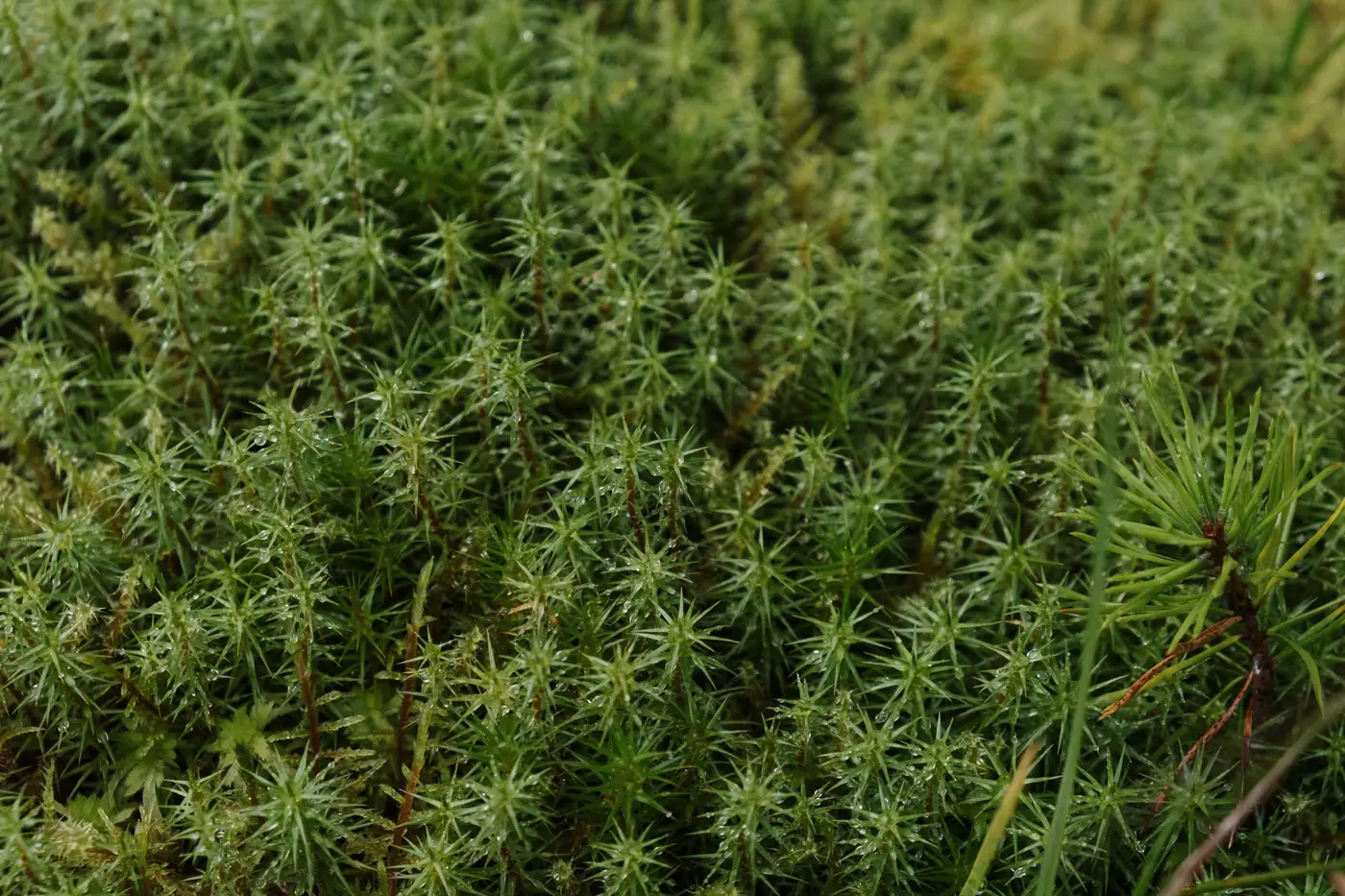
If you've spent any time walking a restoration site with a quadrat, you already know sphagnum is the tell. Where the moss carpet is thick, springy and wet underfoot, the peat below it is usually doing what peat is supposed to do: staying waterlogged, staying anaerobic, staying put as carbon rather than drifting off as CO2 or going up in smoke. Where sphagnum has thinned to scattered cushions or disappeared under purple moor-grass and bracken, that's usually the first sign the water table has dropped out from under the site, whether from a forgotten drain, a bund that's failed, or just a dry run of summers.
Sphagnum cover matters because the moss does two jobs at once. It's an indicator and it's an engineer. As an indicator, live sphagnum needs the water table within a few centimetres of the surface pretty much year-round, so a healthy cover tells you the hydrology is holding. As an engineer, the moss itself builds the conditions it needs: it holds water like a sponge, it acidifies the surface, and its own dead tissue is what accumulates into peat in the first place. Lose the moss and you lose the thing that was slowing decomposition and keeping new peat forming at all.
Reading sphagnum as a peat condition indicator
On a restoration programme, you're usually tracking a handful of peat condition indicators alongside sphagnum: standing water and pool extent, the ratio of sphagnum to vascular plants like molinia or birch scrub, surface microtopography (hummocks and hollows versus a flattened, drained surface), and any bare peat showing through. Sphagnum cover sits near the top of that list because it responds faster than the peat body itself. The water table can drop for a season or two before you see visible subsidence or cracking. Sphagnum starts to brown and recede within weeks of sustained drying, well ahead of any change you'd catch in the peat itself.
That's also why it's worth tracking sphagnum trajectory rather than a single reading. A site that had 40% cover last year and has 25% this year is telling you something different than a site that's held steady at 25% for three years running. The direction of travel is the useful number for a funded restoration plan, because that's what you report against: is the intervention working, or is the site still losing ground.
What drives sphagnum regeneration, and what stalls it
Sphagnum regeneration after rewetting is well understood in principle but stubborn in practice. Blocking grips and drains raises the water table, which is the precondition, but the moss itself often needs a nurse surface, bare or thin vegetation, to establish on, and it can take several growing seasons to go from scattered propagules to a closed carpet. Regeneration stalls for predictable reasons: the water table bounces around too much (sphagnum tolerates waterlogging better than it tolerates repeated wet-dry cycling), competing vegetation like purple moor-grass shades it out before it gets a foothold, or grazing and trampling keep knocking back young growth before it mats together.
This is where plant-by-field, or in this case cell-by-cell, condition tracking earns its keep. A restoration area rarely moves as one block. Some cells re-wet and green up within a couple of seasons; others sit next to a leaking drain and stay dry despite the same capital works going in. Knowing which cells are regenerating and which aren't lets a programme manager target follow-up works, extra damming, scrub control, a second round of cell bunding, at the parts of the site that actually need it, rather than re-treating the whole area on a fixed cycle.
Tracking it at scale
Sphagnum is slow to check by eye across anything bigger than a few hectares. Quadrat surveys are accurate, but they don't scale to a whole catchment, and by the time a walkover crew gets around the full site, conditions have often moved on. Peatland Monitoring reads peat condition annually from wide-swath satellite imagery, flagging drainage signatures, burn scars and bare peat exposure across a restoration area and building a year-over-year change layer a programme manager can run alongside ground survey.
If you're reporting peat condition against a funded restoration plan and want an early look at how that annual change layer could work for your site, Peatland Monitoring is taking early-access signups now.