Field notes · 16 November 2026
Forest-to-bog restoration: why conifer removal comes before rewetting
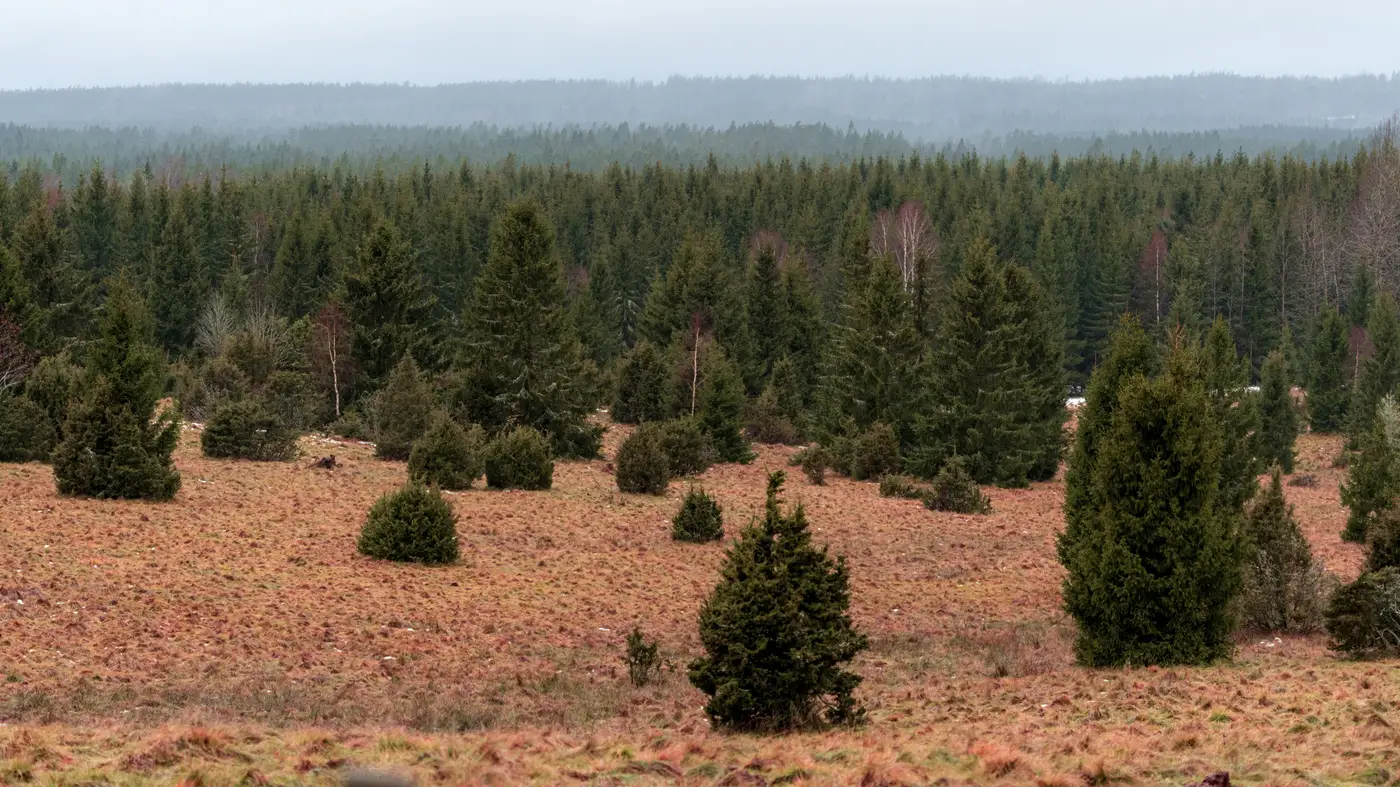
Forest-to-bog restoration is the process of taking land that was planted with conifers on deep peat, usually in a block forestry scheme from the 1960s to 1980s, and bringing it back to open bog vegetation. On most of these sites that means felling the trees, dealing with the stumps and brash, then blocking the drains and furrows that were cut when the forest went in.
It sounds like two jobs done at once. It isn't. The order matters, and getting it backward wastes a felling season and a bunding budget.
What's actually sitting on the peat
Afforested peat isn't just peat with trees on top. When these blocks were planted, contractors cut parallel drainage furrows across the whole compartment to dry the ground enough for conifers to root. Decades on, those furrows are still moving water off site, and the trees themselves have been pulling water up and out through transpiration the whole time they've been standing. A mature Sitka spruce crop on peat can keep a water table several hundred millimetres lower than open bog nearby, just by existing.
That's the problem conifer removal is solving before anyone touches a dam. The canopy and the root mass are actively working against rewetting. Block the drains under a standing crop and the trees will keep drawing the water table down regardless, because transpiration doesn't stop for a dam.
Why the felling has to go first
Fell first, then rewet, and the sequence lines up with what the peat needs:
The trees come down, usually by whole-tree harvesting or felling to waste depending on timber value and ground access. Brash gets mulched and spread, mounded, or lifted off, depending on the scheme's forwarding route. Stumps mostly stay in. Pulling them disturbs the peat surface more than leaving them to rot down, and most restoration specs now leave stumps as standard practice.
Only after the canopy is gone does the drain-blocking and bunding contractor move in. With the trees out, the old furrows stop being a drainage network for a live crop and become the thing you're plugging to hold water on site. Peat dams, plastic piling, or timber bunds go into the furrows at intervals set by the site's slope and drain density, and the water table starts responding to rainfall again instead of to root uptake.
Do it the other way, bund before felling, and the dams sit there doing very little while the standing crop keeps the water table low. Felling after bunding also risks brash and machinery wrecking dams that have only just gone in. Most restoration contractors who've done afforested peat before will tell you this without needing to be asked: fell, let the compartment settle for a season if ground conditions demand it, then block.
There's a timing wrinkle worth flagging for anyone writing the restoration plan. Felling itself can cause a short-term flush of water and sediment as root uptake stops suddenly. Some schemes phase the felling across compartments rather than clearing a whole catchment in one go, partly to manage that flush and partly to spread machinery traffic across drier ground windows.
What funders and plan reviewers usually ask about
Grant panels and peatland strategy reviewers tend to ask the same two things on afforested peat applications: has felling been sequenced ahead of rewetting works, and is there a stump-retention rationale. Both are now standard enough in restoration guidance that leaving them out of a plan reads as a gap rather than a choice.
Once the canopy's down and the dams are in, the harder part starts: watching whether the bog vegetation is actually recovering, or whether bits of the compartment are still drying out, burning, or sitting bare where the forest floor never grew back a moss layer. That's the stage where a programme manager needs a read on the ground that doesn't depend on sending a team out to walk every furrow line, which is the gap Peatland Monitoring is built to fill with an annual condition layer against the funded restoration plan.
If you're scoping a forest-to-bog scheme and want to see what post-rewetting monitoring could look like for your site, get in touch about early access.