Field notes · 2 November 2026
What is a peat pipe, and why it can take your dam out
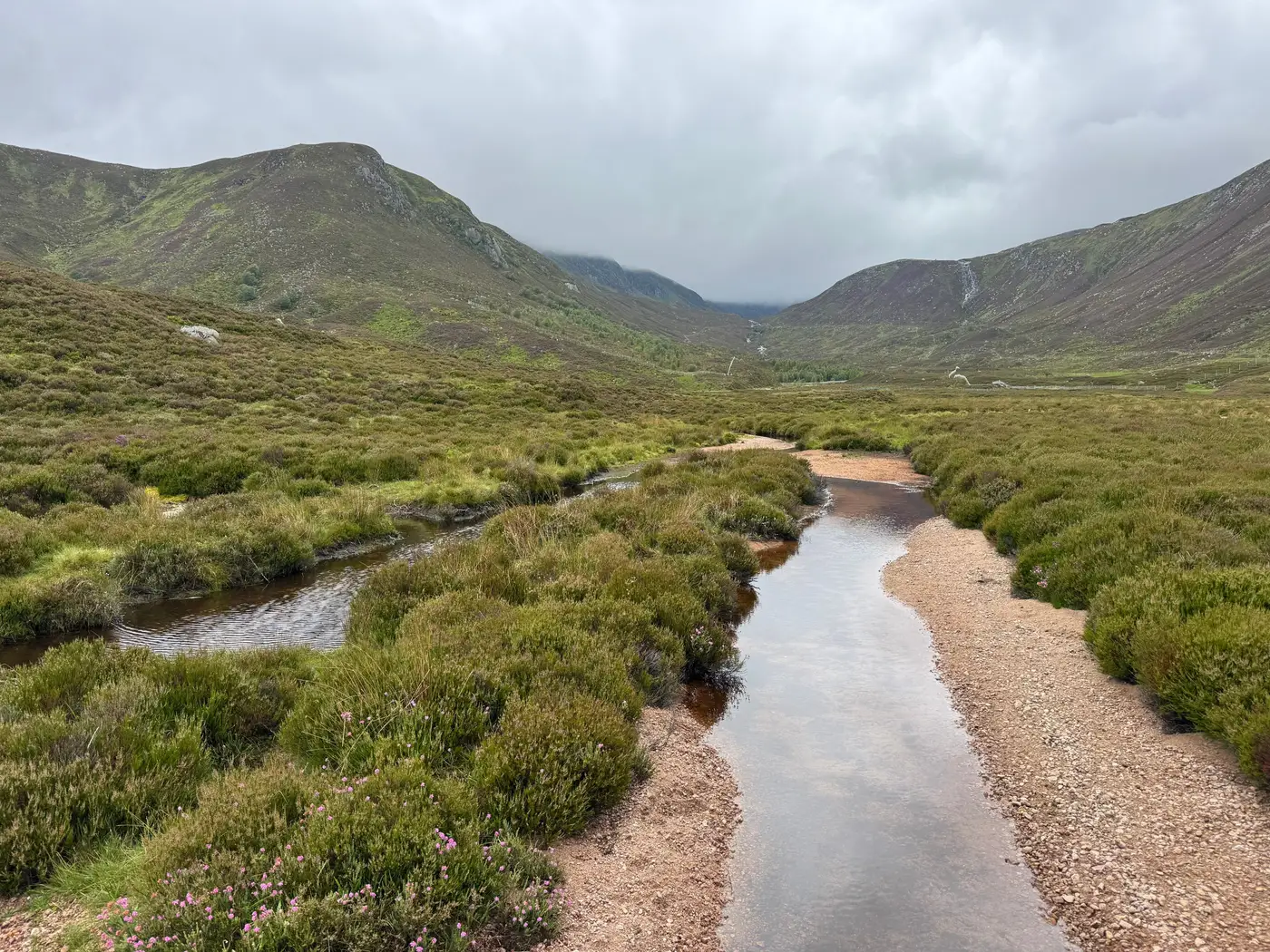
A peat pipe is a tunnel of moving water inside the peat body itself, below the surface you walk on. It starts small: a seam left by an old grip, a root channel, a crack that opened in a dry August. Water finds that weakness and starts carrying peat particles with it. Keep that going for a season or three and the channel widens into something you could put your arm into, running under the bog with nothing on the surface to show it's there.
This is subsurface erosion, and on blanket bog it behaves very differently from the gully erosion most restoration teams are trained to spot. A gully is visible. You can walk the catchment and see where water has cut down to mineral soil. A pipe runs underneath an intact-looking surface, often for tens of metres, and the first sign most programmes get is when the roof falls in.
Why a dam doesn't need to be breached to fail
Re-wetting works by building dams and bunds across grips and old drains to hold water back and raise the water table. The engineering assumption behind that is simple: water moves over the structure or it doesn't move at all. Piping breaks that assumption. Water finds a way through the peat beside or under the dam instead of over it, following exactly the kind of weak seam that forms where disturbed peat meets undisturbed peat, which is precisely the zone around every dam you've built.
Once a pipe connects upstream water to downstream ground, the dam holds back a pond that's already draining through the peat beside it. From the top it still looks like a working structure. Underneath, the peat around it is being hollowed out. The failure mode is a sudden collapse: the roof of the pipe gives way, the dam slumps into the hole, and the pond empties in hours. A restoration area that took three field seasons to re-wet can lose its water table in an afternoon.
This matters past the cost of rebuilding one structure. A dam failure that drains a cell exposes bare peat that had been under water, and bare, drying peat on blanket bog is the condition that drives the heaviest carbon loss of any disturbance type the system can be in. A single piping failure can undo more of a restoration plan's carbon case than the drain network it was meant to fix.
What shows on the surface before the roof falls in
Piping rarely announces itself cleanly, but there are tells if you know where to look. Localised subsidence, a patch of ground that's dipped a few centimetres relative to what's around it, often marks a pipe running close to the surface. Sudden wet flushes appearing downslope of a dam in a dry spell, with no obvious surface source, usually mean water is moving through rather than over the ground. "Boils," small points where water pushes up through the peat under pressure, are a late-stage sign that a pipe network is active and close to collapse.
These signs matter measured against last year's condition at the same spot. A patch that subsided 4 cm since the last visit is the finding. A patch that's always been 4 cm lower than its surroundings is just the local topography. Getting that year-over-year read consistently is hard for ground crews covering a large restoration area on a fixed monitoring budget.
This is the gap an annual condition layer is built to close: a yearly look at drainage, burning and bare peat exposure across the whole area, flagged against last year's read, so the dams showing early subsidence or unexplained wet patches get a site visit before the pipe under them finds its way through. If piping is the failure mode your funders never asked about but your dams are exposed to anyway, an early read on how your restoration area is holding up year to year is worth getting on the books before the next wet winter tests every structure you've built.
Peatland Monitoring is taking early participants now, ahead of general release.