Field notes · 23 November 2026
Bund vs dam in grip blocking: what's the difference?
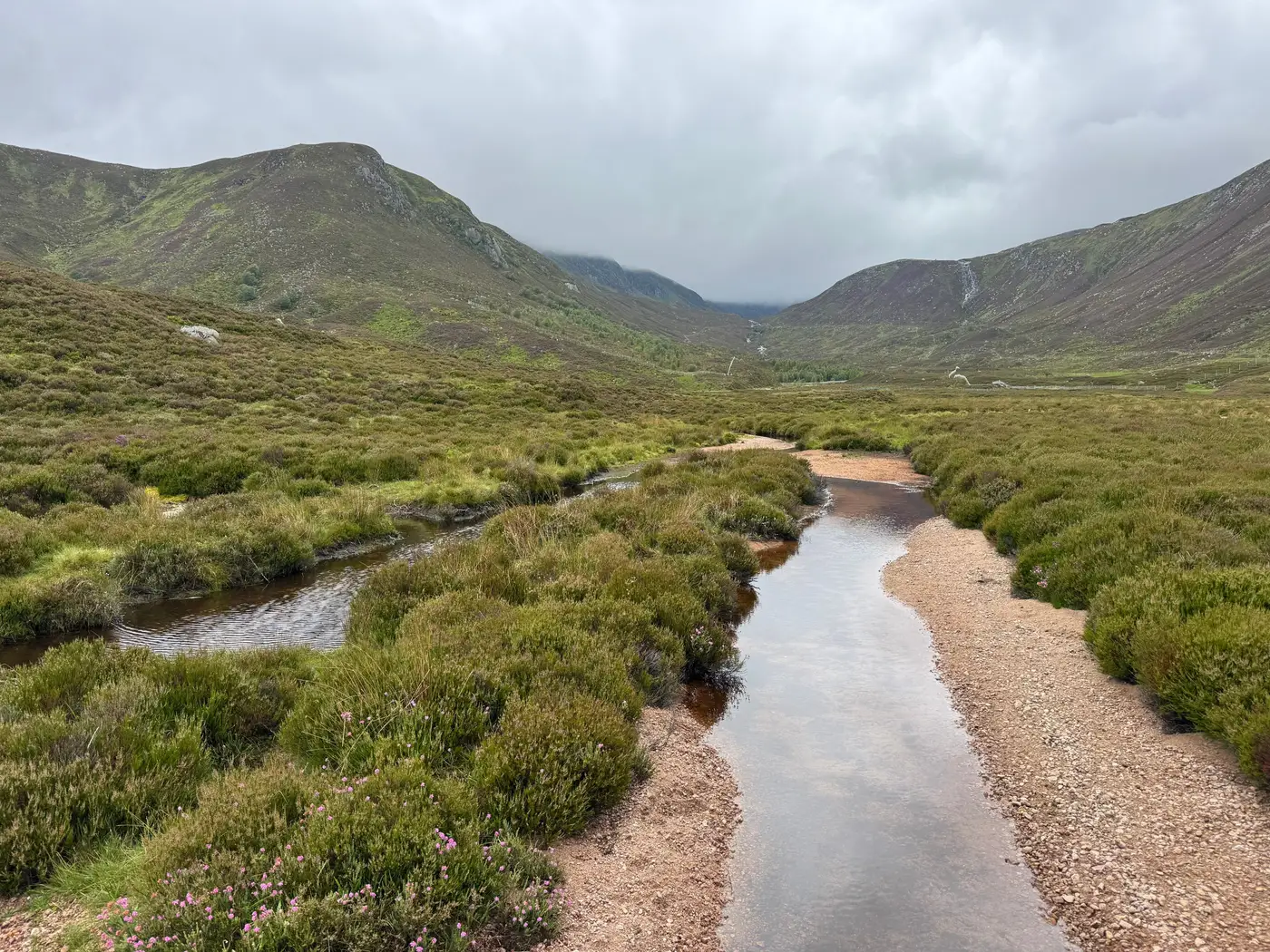
If you've sat through a contractor's method statement for grip blocking, you've probably seen both words on the same drawing and wondered whether someone was just being inconsistent. They weren't. A bund and a dam do related jobs on a restoration site, but they're built differently, sit in different places, and fail in different ways. Getting the terminology straight matters when you're writing a spec, checking as-built drawings, or working out why a section of blocked grip is still draining three years after the contractor signed off.
Dams sit inside the grip
A dam, in grip blocking language, is a structure built within the channel itself. It's keyed into the base and sides of the grip, usually peat if there's enough structure left to compact, or plastic piling, timber, or heather bales where the peat is too degraded to hold a shape. The dam's job is narrow and specific: hold back the water moving down that particular drain, pond it behind the structure, and let it spread sideways into the surrounding peat so the water table lifts along the line of the grip.
Dams get spaced at intervals along a grip's length, not just at the outfall. A single dam at the bottom of a long drain does almost nothing for the peat twenty metres upslope. That's why specs usually call for dams every few metres depending on gradient, often tighter on steeper ground where water would otherwise find a way round or over the top.
Bunds work across wider or shallower features
A bund is a built-up bank, not an in-channel plug. You'll see bunds used where the feature being blocked is too wide, too shallow, or too irregular for a conventional dam to key into properly: old hagg complexes, eroded gully networks, bare peat pans where surface water sheets across rather than running in a defined channel. Instead of fitting inside the feature, a bund sits across or around it, raised above the surrounding ground, built from excavated and compacted peat (or occasionally mineral material where peat won't hold).
Bunds also get used peripherally, around the edge of a restoration cell, to stop water running off bare peat before it reaches a blocked grip at all. In that context a bund contains a whole area, holding the rewetting inside the cell even where there's no single drain to block.
The practical distinction, if you want one line for a site diary: a dam blocks a channel from within; a bund contains or diverts water from the surface, across a wider footprint, where there's no single channel to key into.
Why the distinction matters once the contractor's gone
Dams and bunds fail differently, which is the real reason to keep the terms straight rather than using them interchangeably in a report. A dam typically fails by water cutting round one end or undermining the base, a localised breach that shows up as a visible notch and a renewed flow line downstream. A bund tends to fail by slumping or by water finding a low point along its length and cutting through, which can open up a much wider area to drying than a single dam breach would.
Most funded schemes list dam counts and bund lengths as separate line items in the restoration plan. Post-construction checks should confirm each structure is holding the way its own type actually holds: a dam with an intact notch line and a steady pond behind it, a bund with no slump or low point along its run. A walkover that only logs "structure present" for both can miss a slumped bund entirely while the dam schedule looks fine.
This is also where an annual look at the restoration area earns its keep. Grip networks and hagg edges don't always show obvious change from the ground in year one, but drainage reasserting itself behind a failed bund or around a bypassed dam tends to show up in the colour and wetness of the peat surface well before anyone walks the line again. Peatland Monitoring's annual condition layer and change flags are built around exactly that gap between site visits, flagging the drainage and bare peat patterns worth sending a team out to check against the dam and bund schedule on your as-builts.
If you're tracking a funded restoration area and want that check run against this year's imagery instead of waiting for the next site visit, join the early access list.