Field notes · 7 October 2026
How often should you resurvey a site after grip blocking?
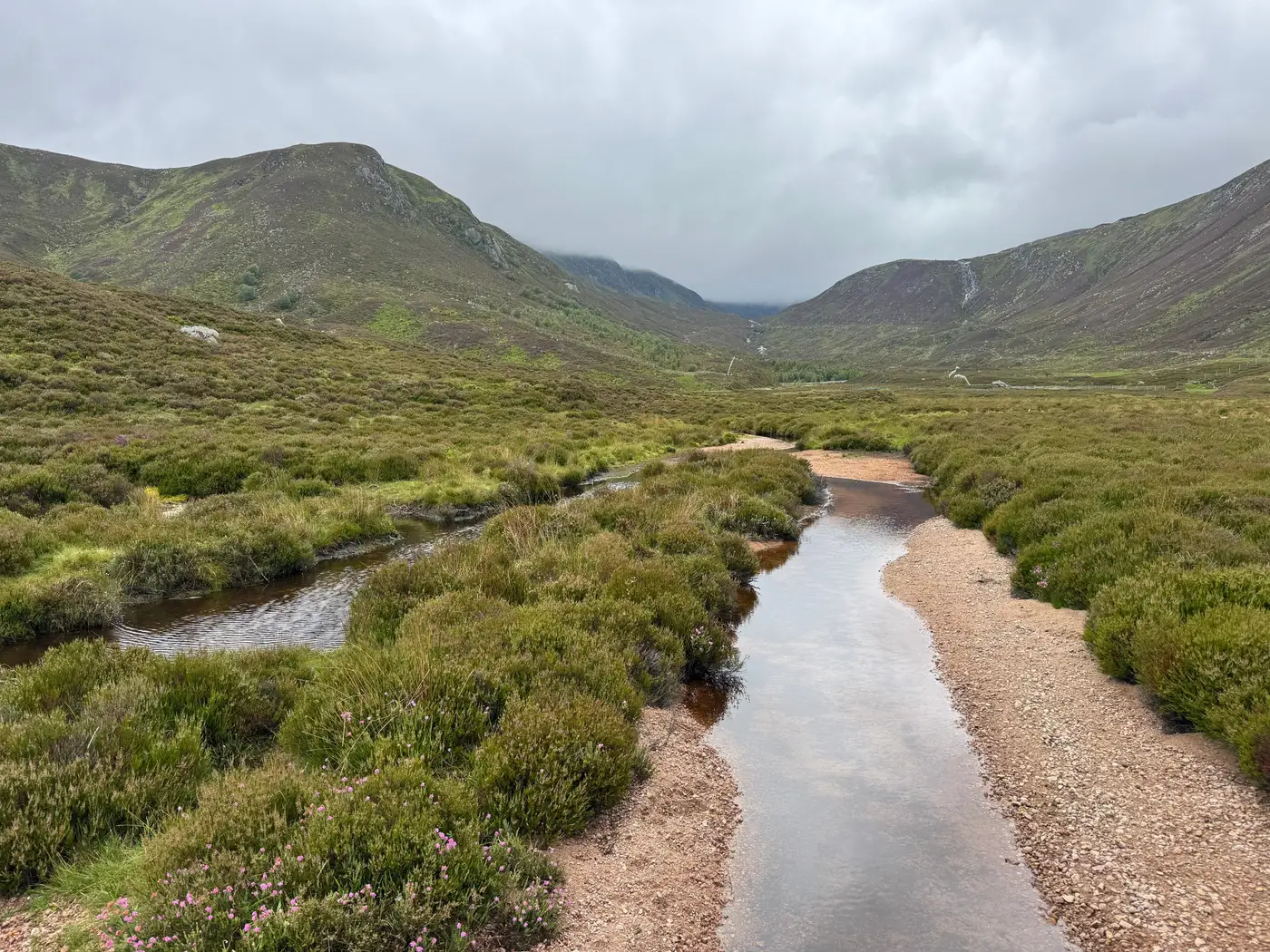
Grip blocking gets logged as "complete" the day the last dam goes in, but the site doesn't settle on that timetable. Peat moves, dams bed in or blow out, and the water table takes its own time to come back up. The honest answer to "how often" is: more often than most funding agreements assume in year one, and less often than you'd think once things stabilise.
Year one: check more than you'll want to
The first winter after grip blocking is when most failures show up. Dam settlement, pipe scour around the edges, a hagg that was stable until the water started backing up behind a new bund. A site visit at month three or four, before the first proper storm cycle, catches the obvious build issues while they're still cheap to fix.
After that first storm season, a fuller resurvey is worth doing even if your grant schedule doesn't ask for one yet. You're looking for:
- dams holding water rather than being overtopped or flanked
- bare peat at pool edges starting to vegetate rather than eroding further
- any new drainage lines cutting round the blocks
A grip blocking job that fails in year one, a dam overtopped at one corner, a channel reopening around a block, won't necessarily get caught until the year three report. That's two more years of a site still emitting as if nothing was done, and a harder repair bill once someone finally walks it.
Settling into an annual peat survey timing
Once the structures have been through a winter and nothing's moved, most restoration programmes land on an annual cadence for the first three to five years. That matches typical capital grant reporting cycles, and it's roughly the interval at which you'd expect to see a real shift in spectral condition: wetter ground showing through, Sphagnum and cotton grass starting to dominate over the drier-adapted vegetation that colonised the degraded surface.
Annual is also the interval that catches a second-order problem: a dam that held fine in year one but is being undermined slowly by a channel nobody spotted. Those failures rarely show up in a single bad season. They show up as a trend across two or three years' worth of imagery or walkover notes, which is exactly why a once-and-done post-build check isn't enough.
Where sites tend to stretch the interval is after that initial window, once vegetation cover has established and there's no history of dam failure on the ground type in question. A blanket bog with stable, well-bedded dams and three clean annual checks behind it can often move to resurvey every two years without losing anything useful. A site on deeper peat with a history of pipe erosion, or one where the restoration contractor used lower dams than you'd have specified, stays on annual regardless of how good the first couple of years looked.
What actually drives the decision
Three things push the interval shorter, not the calendar: funder reporting deadlines, known structural risk on that peat type, and whether the site has a track record yet. A programme manager resurveying on a fixed five-year cycle because that's what the original grant said, regardless of what the ground is doing, is making the same mistake as not resurveying at all. The schedule should follow the site's condition, not the other way round.
For programmes managing more than a handful of blocked sites, keeping that resurvey discipline by walkover alone gets hard to sustain once year three or four rolls around and the original restoration contractor has moved on. An annual condition read pulled from wide-swath imagery, flagged for drainage, burn scars and bare peat exposure against last year's layer, gives a programme team the change list to decide which sites actually need boots on the ground this season. Peatland Monitoring is built around that early read, with an annual change flag list for your restoration area ahead of a wider release.
If you're setting a resurvey schedule for a site portfolio rather than one grip blocking job, it's worth getting on the early access list before the next reporting cycle starts.