Field notes · 2 November 2026
Field notes: the dry September that turned a healthy bog brown
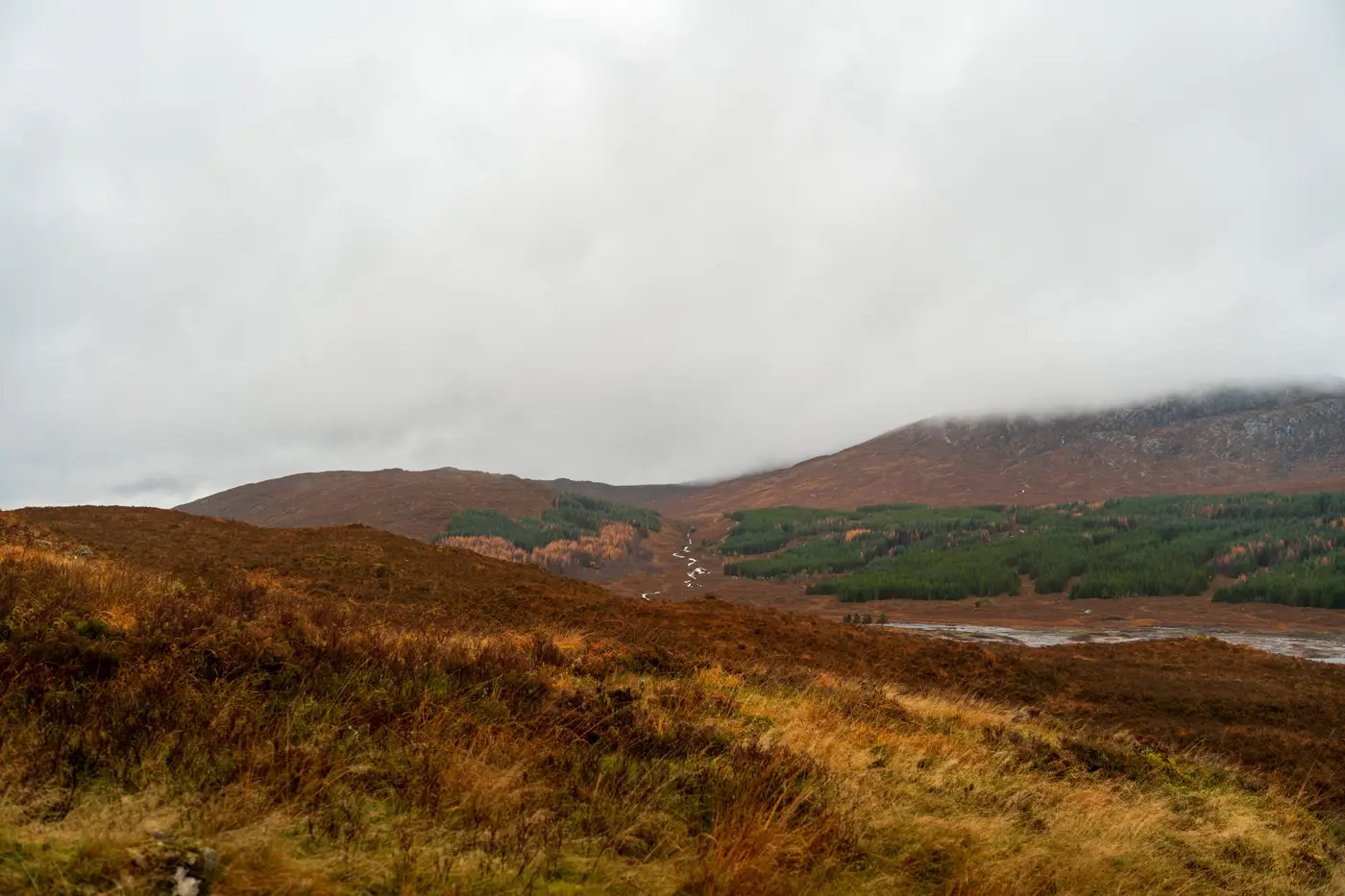
We got the September pull back on a Tuesday and the restoration area we'd been calling "stable" for three years had gone the colour of weak tea. Not patches. The whole central dome, the part with the best hummock-hollow structure on the site, the part we point to on funder visits.
First reaction in the office was the one you'd expect: has something gone wrong. Had a drain reopened. Had someone been burning off the margin and we'd missed it on the ground visit. One of the team pulled up the rainfall record before anyone said a word, because that's usually where this story ends.
It had been a dry August running into a drier September. Eleven weeks with next to nothing. The water table on our deepest logger had dropped further than we'd seen since the loggers went in, and Sphagnum does what Sphagnum does when it's stressed: the capitula lose their gloss, the reds go duller, the whole canopy reads differently to a sensor than it does to a boot on the ground. None of that is the bog dying. It's the bog having a bad month.
That's the part worth sitting with, because the imagery genuinely cannot tell the difference between a moss canopy going quietly dormant under drought stress and the same canopy thinning out because the peat underneath it has started to oxidise and lost its grip on water. Both drop the canopy's index value by roughly the same amount and push the same reds toward the same browns. A single September pass shows you the drop in the index. It can't tell you whether the capitula lost their gloss for a season or the peat below them is breaking down for good.
What separates the two is what the pixel does next spring, and what it's been doing for the three Septembers before this one. Our site had a clean record going back to restoration completion: green through to October each year, recovering fast after any dip. This was the first time the signal had moved outside that range, and it moved on the back of a rainfall anomaly we could point to on a chart. If the same area comes back brown next June, after the water table's recovered and the rest of the scheme has greened up, that's a different conversation. That's the one where you start asking about bund failure or a collapsed cell rather than weather.
The bit that's easy to get wrong in either direction is treating a dry-season dip as proof of nothing, or treating it as proof of everything. We've seen programme teams wave off a genuine drainage reopening because "it's just the dry summer," and we've seen the opposite, a panicked report up the chain over a browning event that was pure drought physiology and resolved itself by the following spring without anyone touching a spade. Neither reading survives contact with a second year of data. You need the baseline, and you need the recovery check, before a single annual pass tells you anything you can act on.
For a scheme that's only a few years into recovery, with the kind of funded monitoring plan that gets reviewed by someone who wasn't on site for the drought, a browning flag without context does damage. It reads as failure to a reviewer who's never seen a healthy bog go off-colour in a hot year. The fix is having the year-over-year record sitting there already, so the September dip shows up next to three Septembers that greened back up fine. Running the same annual condition read every year, instead of reacting to one alarming pass, is what lets a dry month read as weather and a real change read as change.
If your scheme's had its own brown September and you want a second opinion on what the record's actually showing, get in touch about early access.