Field notes · 23 November 2026
Cell bunding vs grip blocking: matching the method to the peat
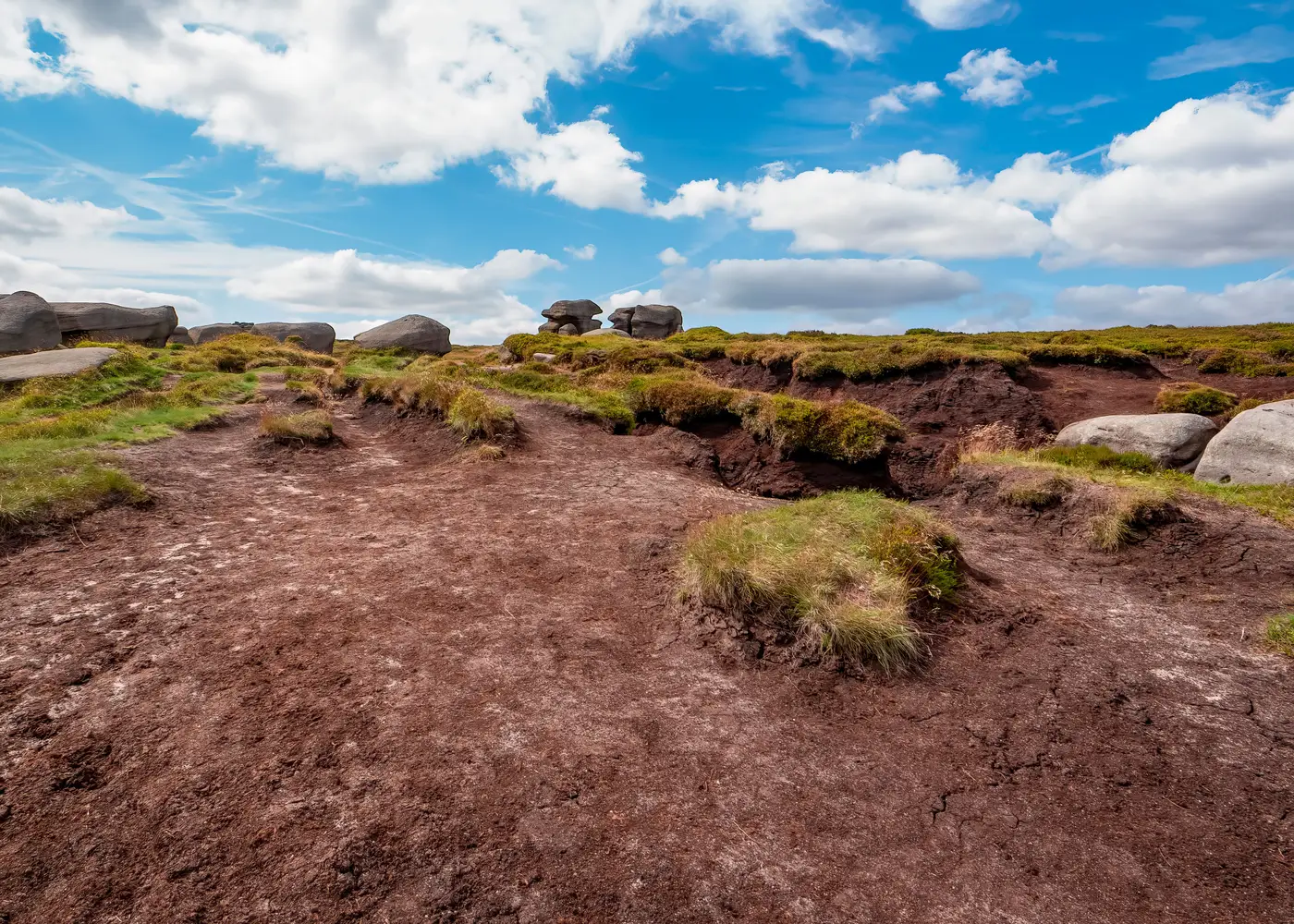
Most blanket bog restoration schemes end up running both methods somewhere on the same site. Which one fits depends on the bit of peat you're standing on.
Grip blocking: for ground that still remembers its channels
Grip blocking works where the old drainage network is still legible. You can walk the line of a grip, see where it cuts through the peat, and read how deep it runs. That's the condition this method wants: a defined channel, peat deep enough to key a dam into firm material either side, and a gradient gentle enough that one dam holds back water rather than just slowing it for ten metres before the next drop.
Plastic piling, timber, or peat dams themselves all do the same job here: stop the grip acting as a drain, let the water table climb back up around it, and give Sphagnum a reason to move back in. On moderate slopes with well-spaced grips this is quick work per metre and the hydrology tends to respond fast, often within a season or two of rewetting.
Where it struggles is on peat that's already eroding away from the drain edges. If the grip has widened into a gully with slumping peat walls, a dam built for a tidy channel won't key in properly, and you're rebuilding it every winter after high flows blow it out.
Cell bunding: for peat that's lost its shape
Cell bunding suits ground where the surface has broken down into haggs, bare peat pans, and dendritic erosion gullies that follow no grip pattern at all. Rather than plugging individual drains, you build low bunds across the slope to carve the degraded surface into cells, each one holding its own pool of water rather than letting it all run off downslope.
This is the method for the sites that look worst on first visit: extensive bare peat, no vegetation holding the surface together, water running off as sheet flow rather than through defined channels. Cell bunding creates a drainage pattern where none exists to block. The trade-off is scale of works. Bunding a hagg complex takes more machine time and more bund metres per hectare than blocking the same area's worth of grips, because you're reshaping the hydrology of the whole cell rather than plugging a line.
On shallower peat, bunding also needs more care. A bund that's too tall for a thin peat profile can push water sideways into adjacent ground instead of holding it where you want it, so depth surveys before works matter more here than they do for grip blocking on deep blanket bog.
Mixed sites are the normal case
Most funded restoration areas aren't one peat condition end to end. A scheme might have intact grips on the shallower upslope ground and a hagg complex lower down where water has concentrated and stripped the surface for decades. Treating the whole area with one method because that's what the contractor quoted for is how you end up with dams in ground too degraded to hold them, or bunds built where a simple grip block would have done the job for a third of the cost.
Walking the site, or getting a condition read that does it for you, before locking in the works plan settles this question early. Bare peat extent, gully pattern, and where drainage has already reorganised itself tell you which method goes where, worth knowing before the dam count goes into the funding bid rather than once the first winter shows which ones held.
That's also where tracking the site after works pays off. Change flags on bare peat extent year over year tell you whether a bunded cell is rewetting or whether the bund line needs a second look before the next reporting round. Peatland Monitoring builds that annual read for a restoration area, matched against what was in the funded plan rather than a generic habitat map.
If your scheme is running both methods across one site, an early-access read on the whole restoration area might save you a field visit or two next spring.